Created by: David Fisher – Lathe Product Specialist, Okuma America Corporation
Dive a little deeper. Uncover what’s unseen. Explore the dimensions of design. Tolerances and longevity usually tell the stories of our machines. Today, we’re offering a new point of view.
Customers love it, competitors fear it, and the name speaks for itself.
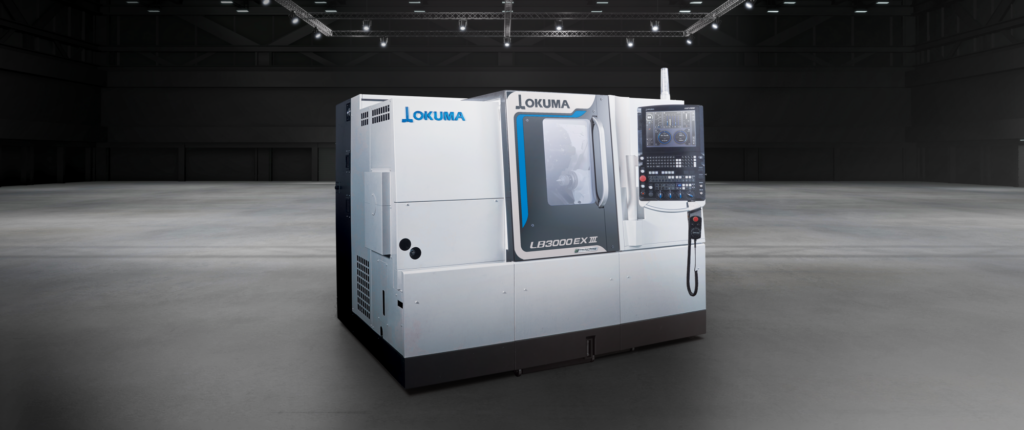
The Okuma LB3000 EX III MYW is our one-saddle multitasking turning center in the 8-10 chuck class. Or, as we like to put it, this lathe is the benchmark that everyone else chases. Blending traditional Okuma craftsmanship with advanced technologies, this machine has evolved for more than 40 years to meet the exact, ever-changing needs of manufacturers. The power, speed, and precision you see today are the combined result of our legacy, leadership, and commitment to continuous improvement. But there’s more beyond the surface. A lot more.
Let’s take a closer look at some of them, peeling back layers to find the details that power breakthroughs. From the base and the build to thermal integrity and high-torque motor, discover how Okuma’s engineering excellence truly fuels manufacturers’ greatest potential.
Let’s Begin With the Base
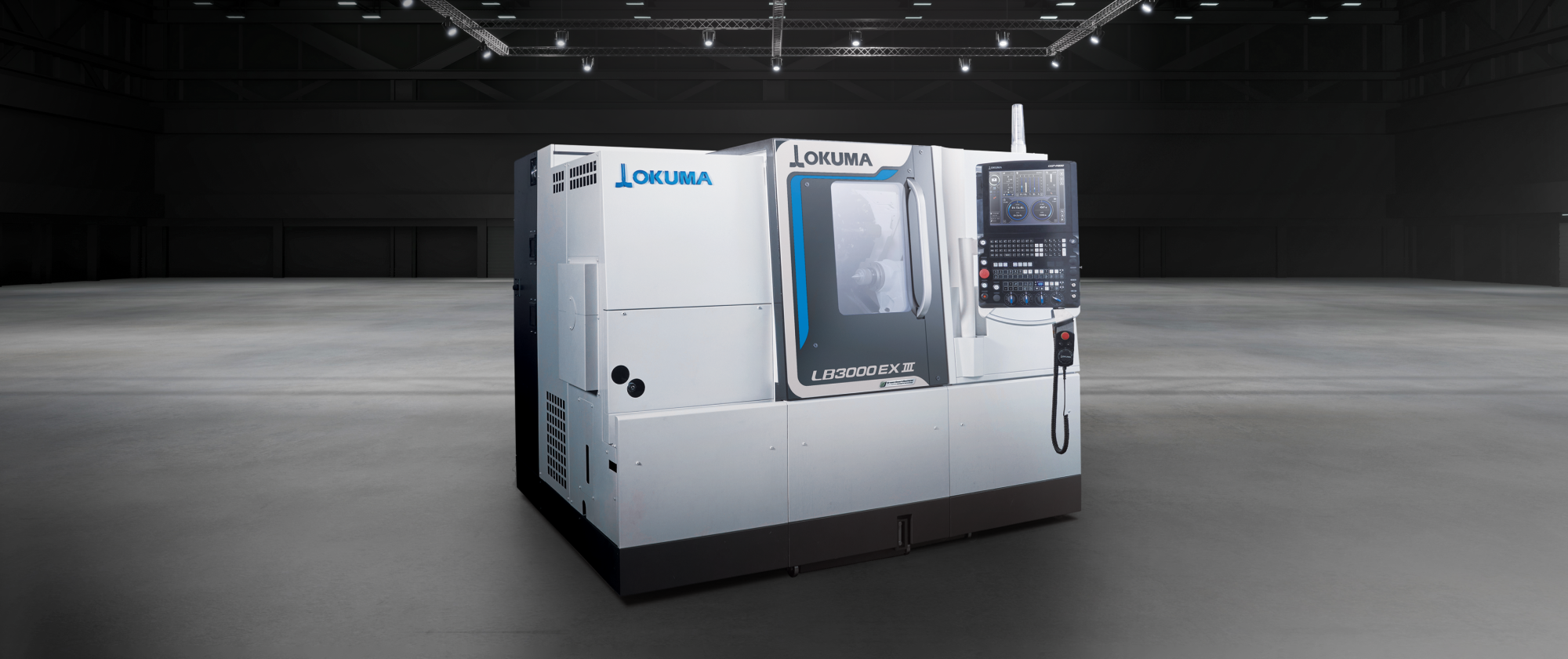
A machine, its parts, and its ability to earn new business over time are only as strong as the base it’s built on, which is why the Okuma LB3000 EX III MYW is one of the heaviest and strongest lathes in its class. The basic structural elements are made of long-lasting and wear-resistant cast iron, which extends tool life and enables enduring precision for decades — this is evidenced by many 25-year-old LB models operating in shops all over the world today.
An Integral Box-Slant Bed Construction

On the Okuma LB3000 EX III MYW, the box-slant bed isn’t just available in a variety of sizes and lengths for added customization; it’s also mounted on the rigid 30-degree base to support the cast iron headstock, drive capacity, and integral box-type guideways. This preserves long-term accuracy and helps support the spindle, even under nonstop workloads.
With hand-scraped surfaces to align components within millionths of an inch, enhance lubrication, and protect the machine from wear over time, the box-slant bed also helps minimize and compensate for inevitable thermal growth.
Thermo-Friendly Design
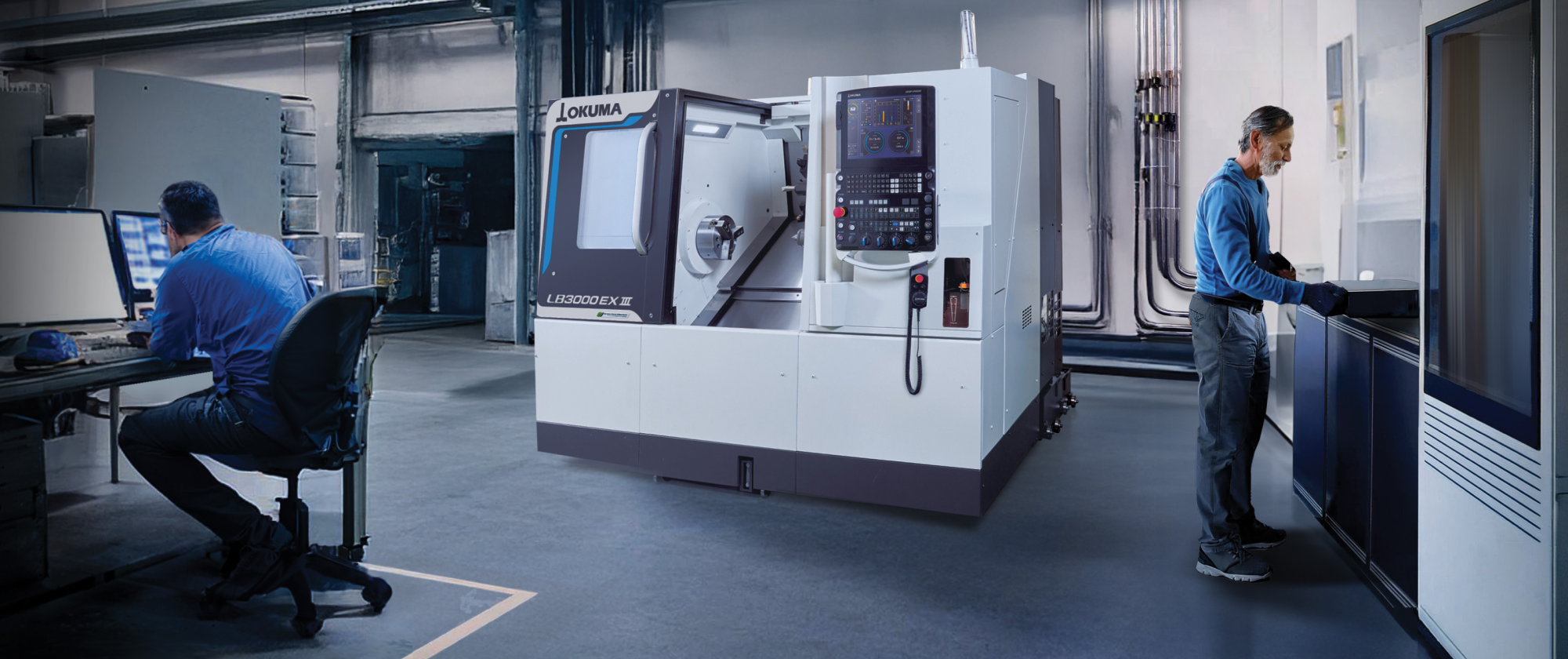
Just as the base casting and bed are consciously designed to balance mass with structural optimization, our control of thermal deformation is deliberate.
- Thermo-Friendly Concept
We combine control technology and machine design to minimize the amount of heat generated during machining and manage heat that cannot be eliminated. Through automatic program adjustments, the machine compensates for heat and equalizes ambient temperature influences, protecting dimensional stability. - Built-In Bed Predictability
Any component that generates heat, like transformers and chillers, is mounted on a separate bracket off of the casting. Eliminating heat sources from the machine’s structure helps push heat outside the machining envelope as quickly as possible. - Heat Minimization
Additional design choices help minimize heat inputs throughout the machine, in turn minimizing growth. - Thermo-Active Stabilizers
With appropriately placed temperature sensors and feed-axis position data, the machine is aware of and adjusts to handle all heat generated near the spindle, workpiece, and within the structure.
Simply adding compensating software won’t do what’s needed. Making the machine tool predictable in how it grows, with technology in the right places, results in unrivaled dimensional stability during any job. When it comes to the Okuma LB3000 EX III MYW, the effects of heat never last, but precision always will.
Spindle and Headstock
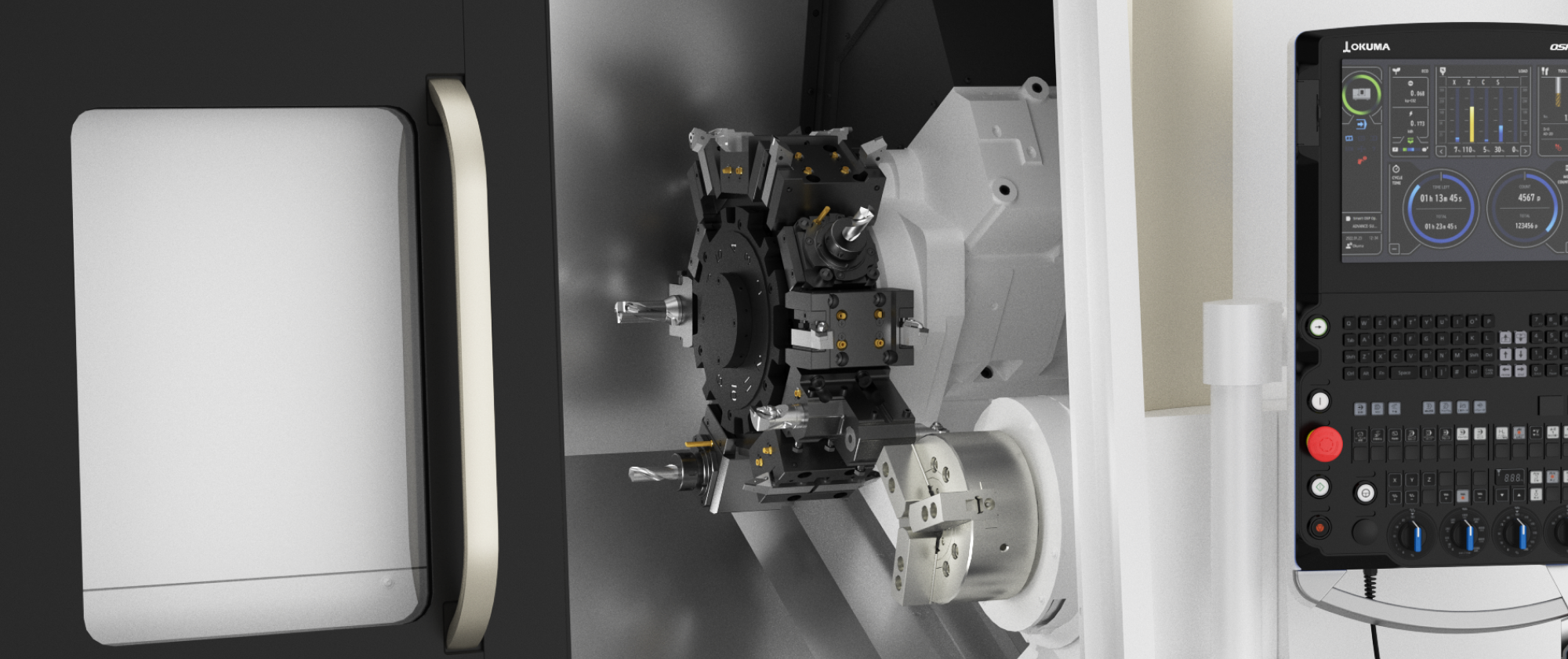
This combination speaks for itself, so we’ll keep it short — even though this spindle is proven for speed and power over long, continuous runs. A cast iron headstock with double row cylindrical roller bearings and angular contact bearings, the headstock easily handles the standard spindle or the optional big bore spindle’s 40hp/30kW drive capacity and 4,200 rpm for the big bore (5,000 rpm for the standard bore). And the PREX motor generates high torque with less heat and lower inertia. Together, the spindle and headstock form a core precision system.
MYW: Milling, Y-Axis, and Sub-Spindle
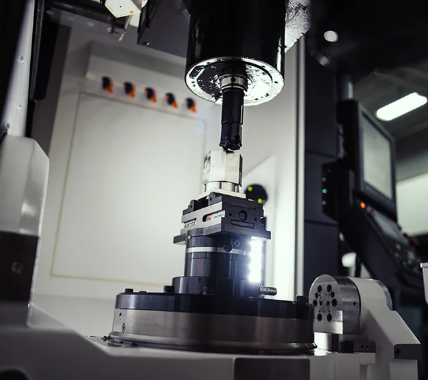
This lathe is many things: powerful, fast, precise, and the poster child for thermal integrity. It’s also our lead-in machine to multitasking. With milling, Y-axis, and sub-spindle configurations, the Okuma LB3000 EX III MYW horizontal lathe completes parts in a single setup, minimizing operator intervention and cycle times. It’s raw material in, finished workpiece out, thanks to:
- Milling
Combining milling and turning processes means fewer setups, faster cycle times, and reduced chance of error during part changeover. On this lathe, the rotating tools are held and driven in the cutting units. - Y-Axis
A Y-axis unlocks more complex machining processes, enabling off-center cutting and angled contouring on the sides of a workpiece. You can mill, drill, ream, and tap. - Sub-Spindle
Two machines are usually needed for front-and-back-side machining, but the sub-spindle keeps this process on just one. Our Torque Skip Function, for part transfer, is standard, and parts ejectors are available.
Because many modern parts require complex contours and intricate shapes, industries increasingly turn to multi-function machine tools. Each of the lathe’s optional configurations adds versatility and competitiveness to shop floors; no additional space needed. Without changing your workspace, an extra axis, spindle, or capability can change everything.
Automation Pairings and Possibilities

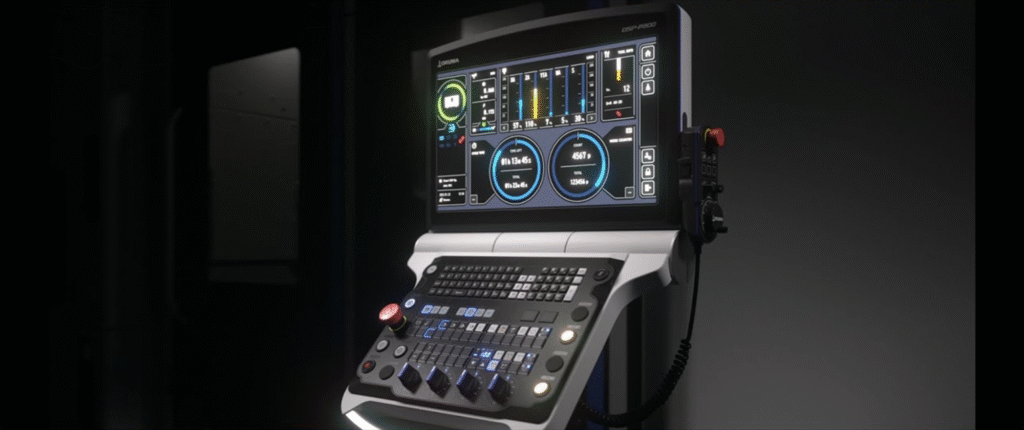
Though this lathe’s beginnings date back to the early 1980s, it’s still fully prepped for the future. The Okuma LB3000 EX III MYW is compatible with entry-level automation systems like bar feeders, more complex setups like gantry loaders, and custom solutions that are waiting to be engineered by Okuma Factory Automation because of the OSP-P500’s robust robotic interface. As business grows and skilled labor shortages stay the course, the ability to add automation keeps production efficient. With this lathe, you have many pairing options.
Small Details Build Big Wins
Big wins build breakthroughs. There’s nothing random about the way the LB3000 EX III MYW — or any Okuma machine tool — is built.
Every detail is an advantage. Every square inch is considered. And the sum of every element above is just the start of how we use 100+ years of experience and our vision for the next generation to engineer excellence.